 |
Corner House Antiques · Thomas and Kathleen Tetro AmericanAntiqueWicker.com Located in the Heart of the Massachusetts Berkshires Route 7, Sheffield, MA 01257 (413) 229-6627 |
| Return to Home Page |
EVENTS AT CORNER HOUSE ANTIQUES
| CORNER HOUSE ANTIQUES WICKER ON LOAN TO EDITH WHARTON'S BERKSHIRE COTTAGE, THE MOUNT | ||

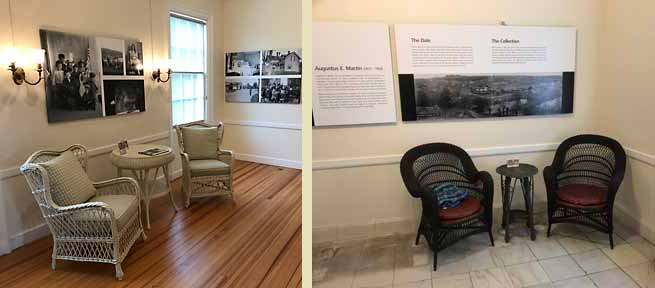
| Corner House Antiques provided period American wicker for an exhibit at Edith Wharton's The Mount, a National Historic Landmark Museum. This special exhibit featured dozens of images taken by Augustus E. Martin, the son of German settlers, who documented working-class life in Lenox Dale from 1890 to 1915. In 1900, nearly half of the Dale’s residents were immigrants. Many of these workers featured prominently in the creation of the Lenox Berkshire Cottages during the gilded age. The exhibit is being presented in partnership with the Lenox Library. | |
 | ||
| MAIN STREETS & BACK ROADS - SHEFFIELD Boston Chronicle TV: Monday May 8, 2017 | ||
 |
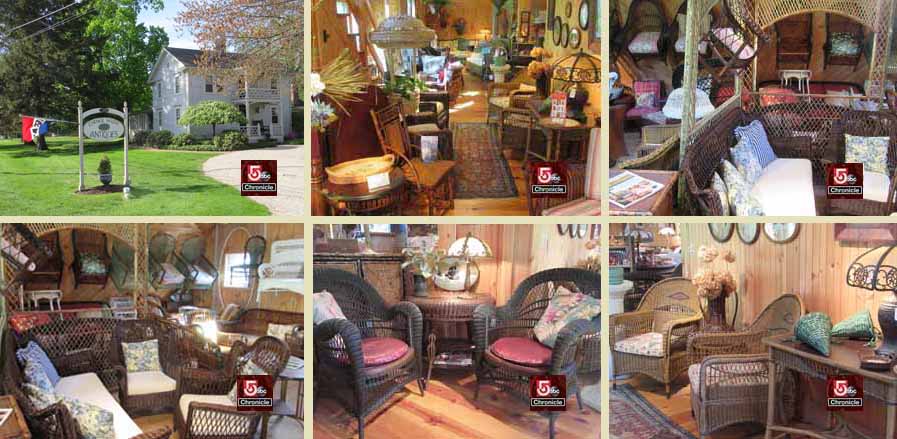
Corner House Antiques was featured as part of a WCVB Boston Chronicle Main Streets & Back Roads special on the town of Sheffield. "Corner House Antiques is a showcase for all things wicker. The 2-story barn with its museum quality collection has garnered a national following. Berkshire county is a purveyor of so many fine old things that the state made it official by naming it the Antiques Capital of the Commonwealth." | |
 | ||
| CORNER HOUSE ANTIQUE WICKER ON STAGE | ||
 |
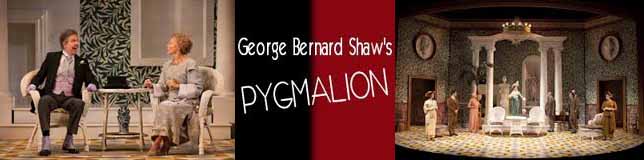
Corner House Antiques continued its longstanding tradition of loaning antique wicker to area theatres. This summer wicker was on stage for George Bernard Shaw’s “Pygmalion" at Williamstown Theatre Festival in Williamstown, MA. | |
 | ||
| LECTURE - AMERICAN WICKER OF THE GOLDEN AGE - | ||

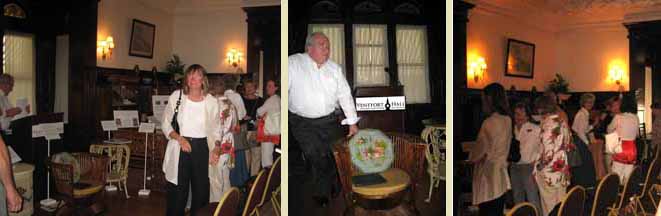
| Ventfort Hall Mansion and Gilded Age Museum hosted a lecture by John Wall of the Wakefield MA Historical Society on the origin of American wicker furniture. The talk was part of the museum's Lecture series and an adjunt to the Designer Showcase which featured a period conservatory furnished in American wicker from Corner House Antiques. Select examples of American antique wicker from were on display during the lecture. | |
 | ||
| CORNER HOUSE ANTIQUE WICKER ON STAGE | ||
 |
Corner House Antiques loaned wicker to an area summer theatre, Barrington Stage Co, in Pittsfield, MA. for the performance "Going to St. Ives". A 1930s pair of rattan club chairs from the estate of the late Doris Duke created the set. | |
 | ||
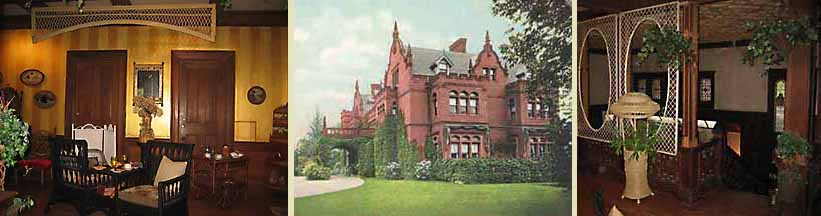
| CORNER HOUSE ANTIQUES AT VENTFORT HALL DESIGNER SHOWCASE | ||
|
| FROM VENTFORT HALL EVENTS CALANDER: "Corner House Antiques accepted an invitation and joined several Berkshire interior designers, antique dealers, artists and artisans in decorating fourteen empty and newly restored rooms and halls on the second floor of Ventfort Hall Mansion and Gilded Age Museum in Lenox Massachusetts. The Berkshire Designer Showcase at Ventfort Hall opened with a champagne reception. The showcase featured the skills, style and artistic flair of some of the Berkshire’s top creative talent in one of Lenox’s largest Gilded Age mansion, a 28,000-square-foot summer cottage built in 1893 for George and Sarah Morgan, the sister of legendary financier J. Pierpont Morgan. Nearly demolished in the mid 1990s, Ventfort Hall has undergone massive restoration at the same time that it has become one of Berkshire County’s major cultural venues offering tours, lectures, theater, exhibitions, concerts, children’s programs, dances, a gift shop, Picnics on the Porch…and the a Designer Showcase." | |
 | ||
| CORNER HOUSE ANTIQUES AT GUIDO'S MARKETPLACE | ||
 |
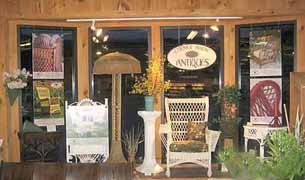
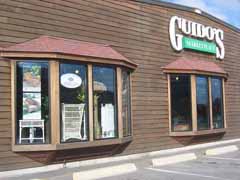
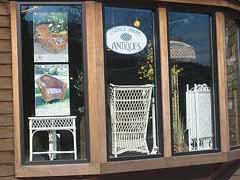
Guido's Marketplace, an upscale market in the Berkshires, located in Great Barrington, MA, has a longstanding program of offering its three large windows to various local artisans, businesses, and community events planners in exchange for a donation to the Guy Masiero Scholarship Fund. Corner House Antiques once again filled one of these windows with a vignette of American antique wicker. |  |
 | ||
| CORNER HOUSE ANTIQUES INITIATES COLLABORATION AMONG BERKSHIRE AREA ANTIQUES DEALERS AND THE SHEFFIELD HISTORICAL SOCIETY | |||
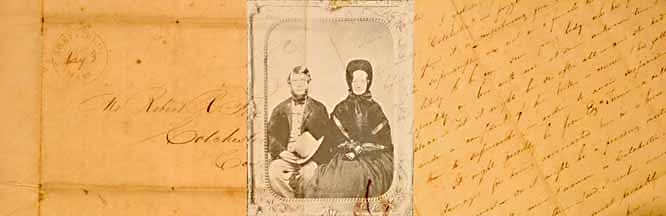 |  | Berkshire area antiques dealers had numerous period furnishings and accessories on loan for the 2010 Sheffield Historical Society exhibition. The Little Family Letters exhibit at the historic 1774 Dan Raymond House museum in the center of town opened Saturday, May 1st and ran until Sunday, October 31st. The theme focused on The Society’s acquisition of nearly 2 dozen letters written in the early 1800s, to and from the family of Ralph and Maria Fox Little, whose family occupied the Dan Raymond House in the 19th century. The collection of letters is believed to be the earliest extant documentation of early 19th century life in Sheffield, the oldest town in Berkshire County. Three decades of family letters offered insight into daily life, from 1807 to 1840. Their worth sheds light on the prevailing topics of the day – health, death, religion and domestic duties, written with an underlying yearning for communication and kinship. The Berkshires have been a destination in the hunt for quality antiques for more than 50 years and the wealth of shops offers a wide variety of specialized focuses in the field. Such collaboration of area antiques dealers and The Sheffield Historical Society transformed the Dan Raymond House Museum for The Little Family Letters exhibit. The north and south parlors, keeping room and buttery were transformed to depict period room setting vignettes with the addition of extraordinary examples of antique chairs, tables, writing desks, paintings, samplers, china, redware and mantle clocks, as well as objects related to letter writing such as inkwells, lap desks, and envelope holders. Poignant excerpts from the letters appeared on the house museum walls to link the history recorded in the letters to the objects in the exhibit. A portfolio of all of the handwritten letters was also available for viewing. | |
|
AMERICAN ANTIQUE WICKER EXHIBITION "SAILED" TO CAPE COD |
|||||
 |
|||||
 |
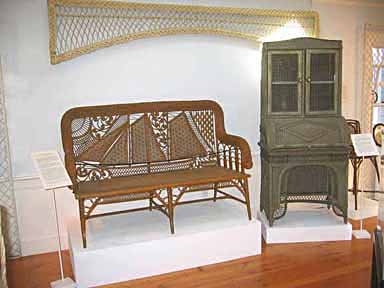
The American Antique Wicker exhibition hosted by The Sheffield Historical Society in 2007 "sailed" to Cape Cod to the Chatham Historical Society for the 2008 summer and fall seasons. The exhibit included examples of woven furniture from the 1870s through the 1920s. Four major styles of wicker evolved during that Golden Age and many period pieces were on display at the Society's Atwood House Museum and galleries on Stage Harbor Road in Chatham. The Sheffield exhibition was drawn from the personal collection of Sheffield residents Thomas & Kathleen Tetro and their business Corner House Antiques in celebration of the business's 30th anniversary. The Chatham exhibit included special additions from the extensive collection of antique wicker collector and dealer, Mary Jean Mclaughlin of Ivoryton CT. | |
|||
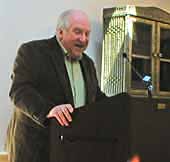 |
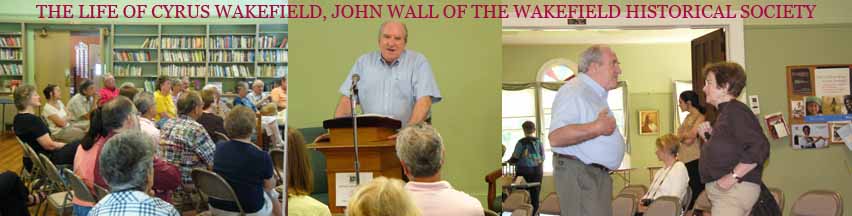
LECTURE - THE LIFE OF CYRUS WAKEFIELD The Chatham Historical Society hosted a lecture by John Wall of the Wakefield Historical Society on the life of Cyrus Wakefield, noted founder of the American wicker industry. The talk took place in the Society's main gallery as a prelude to the American Antique Wicker exhibition opening on June 3. Select examples of American antique wicker were on display in the 8 permanent museum galleries during the lecture. | ||||
| CLICK TO VIEW ON LINE CATALOGUE FROM 2008 AMERICAN ANTIQUE WICKER EXHIBITION |
 | |||
|
CORNER HOUSE ANTIQUES CELEBRATED 30 YEARS with EXHIBITION of AMERICAN ANTIQUE WICKER at THE SHEFFIELD HISTORICAL SOCIETY | |||
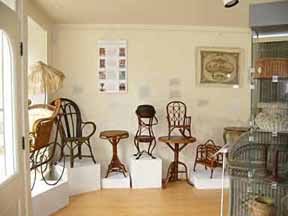 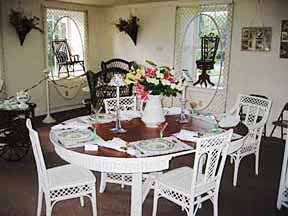 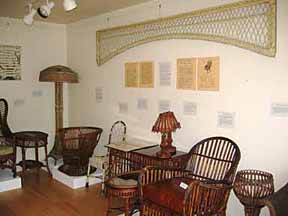 | |||
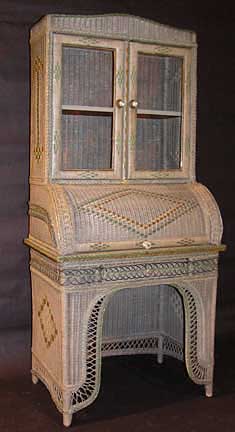
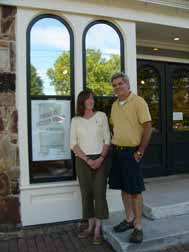 The Sheffield Historical Society hosted American Antique Wicker,
an exhibition of woven furniture from the 1870s through the 1920s. Four major styles of wicker evolved during that Golden Age
and many period pieces were on display at the Old Stone Store, the Society's museum building On The Green, Main St., Sheffield, Massachusetts.
The Sheffield Historical Society hosted American Antique Wicker,
an exhibition of woven furniture from the 1870s through the 1920s. Four major styles of wicker evolved during that Golden Age
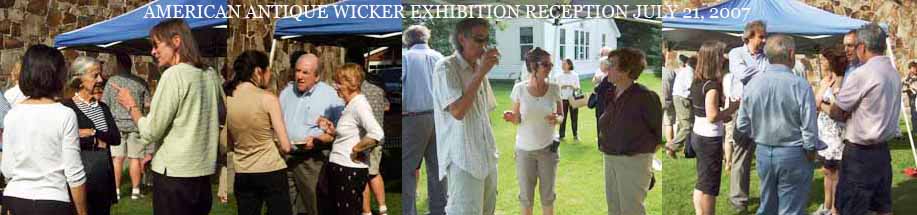
and many period pieces were on display at the Old Stone Store, the Society's museum building On The Green, Main St., Sheffield, Massachusetts.The exhibit ran from Saturday July 7th, through Sunday August 12th, 2007. The exhibition was drawn from the personal collection of Sheffield residents Thomas & Kathleen Tetro and their in-town business, Corner House Antiques. In celebration of their shop's 30-year Anniversary, the couple collaborated with The Sheffield Historical Society to present and intriguing educational display of 19th and early 20th century American wicker. Authenticated items made by the Wakefield Rattan Co., Heywood Bros. Co., Colt Willow Ware Works, and other early wicker manufacturers were on view, as well as historic documents and artifacts related to the industry - weaving patents and furniture illustrations of the 1880s, advertisements, catalogs, posters, and late 19th century photographs. A full spectrum of American wicker was traced from its early rudimentary forms, to intricate Victorian examples, open latticed Bar Harbor designs, flowing Art Deco lines and the rectilinear Stick Wicker style. Rare and unusual antique wicker items were shown along with familiar pieces often depicted in turn-of-the-century Berkshire cottages. | |||
 | |||
 | |||
|
|
||
| CORNER HOUSE ANTIQUES AT
TRADE SECRETS
ANTIQUE SHOW SHARON, CT | |||
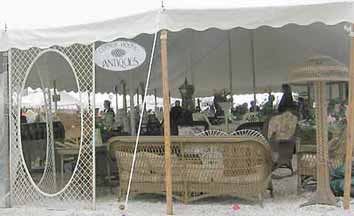 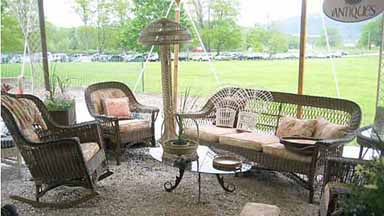 | |||
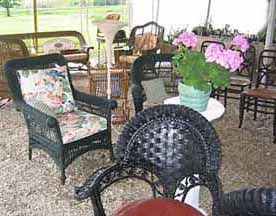 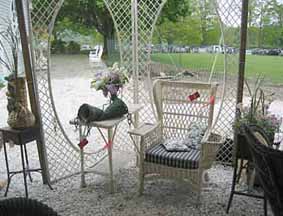 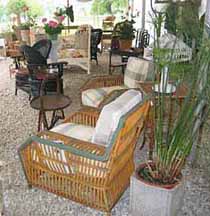 |  | Tom and Kathy Tetro, owners of Corner House Antiques in Sheffield, MA, participated in the annual Trade Secrets antiques & rare garden plant show and sale at LionRock Farm in Sharon, CT. 10% of all sales at the show was donated to Women's Support Services, a worthy charity for victims of domestic violence and abuse. | |
| CORNER HOUSE ANTIQUE WICKER ON STAGE | |||||
|
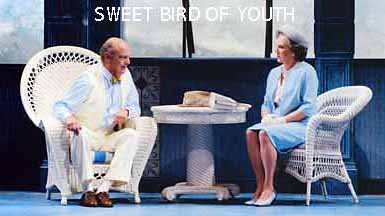
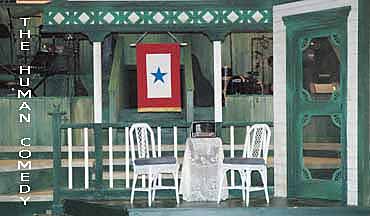
Corner House Antiques continued its longstanding tradition of loaning antique wicker to area theatres. An interesting selection of wicker was on stage for the Tennesee Williams play "Sweet Bird of Youth" at the Williamstown Theatre Festival in Williamstown, MA, and "The Human Comedy" from the story by William Saroyan at the Barrington Stage Co. in Pittsfield, MA. |
  | |||
| CORNER HOUSE ANTIQUE WICKER ON THE BIG SCREEN | ||
 |
Paramount Pictures picking up period wicker purchased for the movie The Stepford Wives, a remake of the 1975 film. Antique wicker from Corner House has appeared in multiple television & motion picture venues. |
|
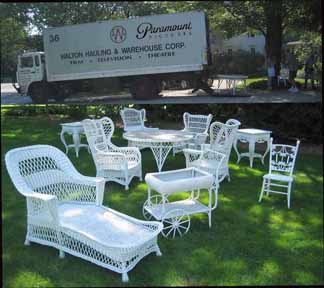 | ||
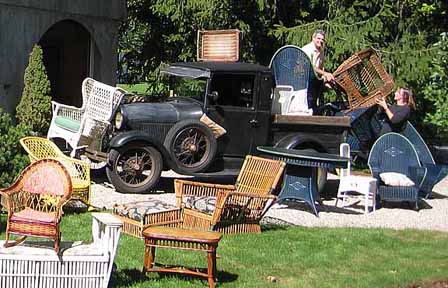
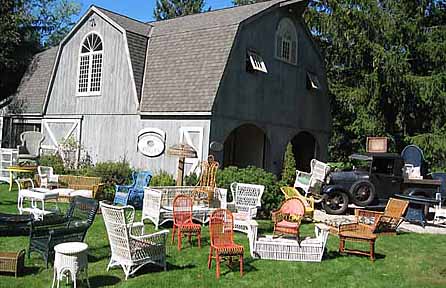
"VINTAGE" DELIVERY ..... FRESH PICKED ANTIQUE WICKER An example of some wonderful buying -- chairs, rockers, tables, multipiece matching sets..... Contact us if you have specific antique wicker needs. | ||
 |
 |
|
| Back to Top |
| Return to Home Page |
All photographs and text copywrited CORNER HOUSE ANTIQUES, © 2005